EN
EN
 ID
ID


 Contact Us
 Location
 E-Form
 Whistleblower Service
 Anti-Fraud Education














Indonesia’s Economy Projected to Remain Resilient Amid Global Uncertainty and Financial Market Dynamics
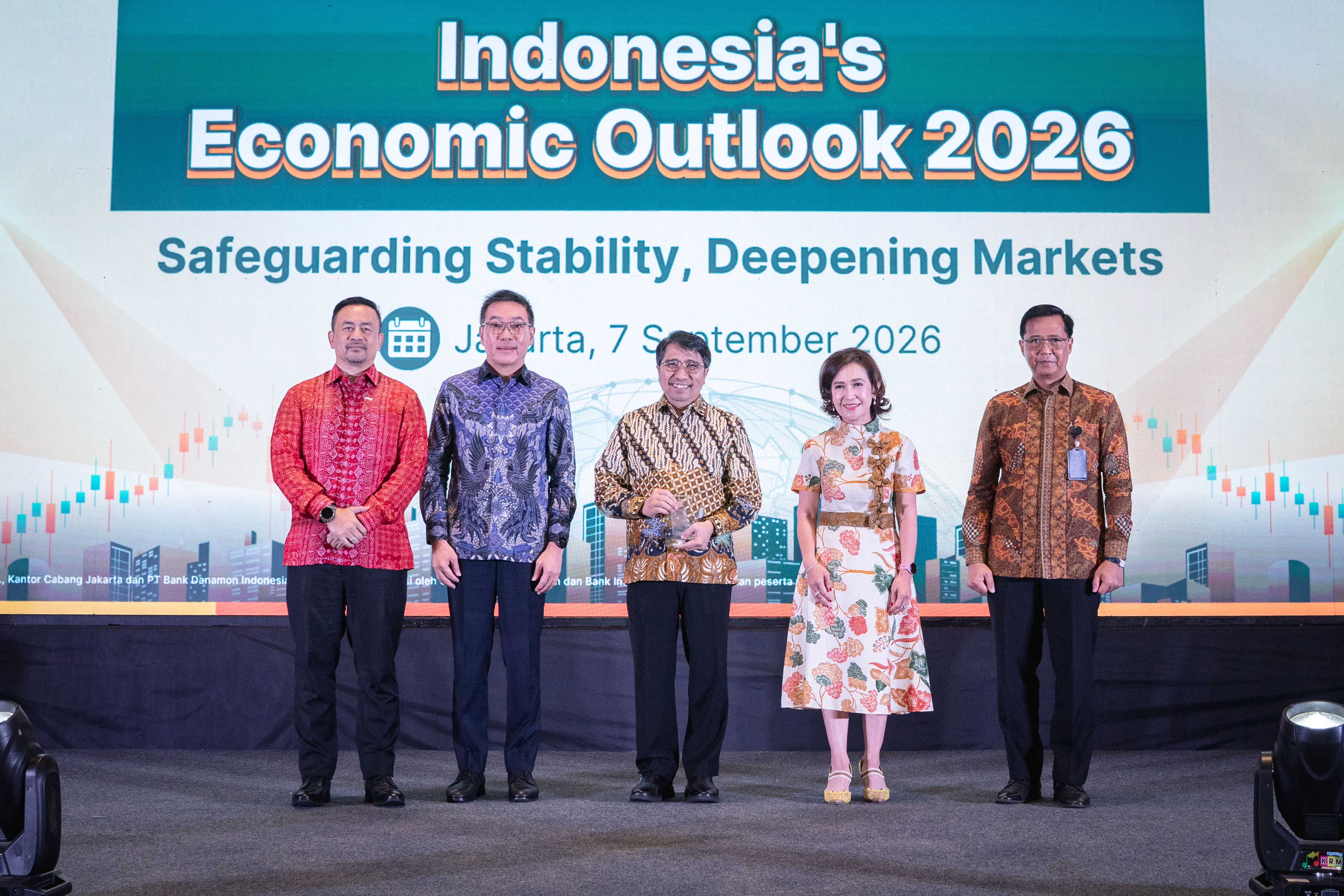
Jakarta, 8 September 2026 – The global economy is expected to continue facing various challenges in 2026, characterized by high energy prices, persistently elevated global interest rates, and a slowdown in global economic growth. Nevertheless, Indonesia is considered to remain in a relatively strong position to maintain its economic growth momentum, supported by stable macroeconomic conditions, continued investment inflows, and the contribution of various emerging strategic sectors.
Lead Economist of PT Bank Danamon Indonesia Tbk (“Danamon”), Irman Faiz, explained that rising energy prices resulting from global geopolitical tensions have triggered inflationary pressures and tightened financial conditions in many countries. Global economic growth is projected to slow from 3.5% in 2025 to 3.0% by the end of 2026 before improving again in 2027, while oil prices, which had increased significantly, are expected to gradually decline as global supply adjusts.
According to Irman, amid these conditions, Indonesia’s economy is projected to grow by around 5.2% in 2026, supported by investment, government spending, solid domestic economic activity, and government policies that encourage national economic activities. Foreign direct investment (FDI) continues to show a positive trend, particularly in downstream industries, the basic metals sector, and the development of data centers, which are beginning to emerge as one of Indonesia’s new sources of economic growth.
"Indonesia’s economy still has sufficiently strong fundamentals to sustain growth amid various global challenges. Investment activity remains the main driver of growth, while opportunities arising from industrial downstreaming, the digital economy, and data center development have the potential to create new sources of growth over the medium to long term," said Irman.
On the other hand, Indonesia still needs to remain vigilant against various external risks. The current account deficit is projected to increase compared to the previous year due to high energy imports and the economic slowdown among several key trading partners. In addition, volatility in global financial markets and shifts in the monetary policy direction of advanced economies may affect capital flows and movements in the Rupiah exchange rate.
To maintain economic and financial market stability, Bank Indonesia continues to strengthen various policy instruments that support financial market deepening, particularly in the domestic foreign exchange market. As global uncertainty and shifts in international capital flows continue to increase, a deeper, more liquid, and more resilient foreign exchange market is considered increasingly important in supporting the stability of the Rupiah exchange rate.
Assistant Director of the Financial Market Development Department of Bank Indonesia, Yansen Lokanata, explained that Bank Indonesia has implemented various policies to strengthen the domestic foreign exchange market, including through the development of Local Currency Transactions (LCT), refinments to foreign exchange market transaction regulations, and the implementation of the Foreign Exchange Market Transaction for Hedging through Partner Banks (VASTRA) Policy.
The VASTRA policy is designed to expand global investors’ access to Rupiah hedging instruments in the domestic market. In addition to enhancing the attractiveness of Indonesia’s financial assets, the policy is also expected to increase liquidity in the domestic foreign exchange market, improve transaction transparency, and support exchange rate stability over the long term.
"Foreign exchange market deepening is an important part of strengthening national economic resilience. The various policies continuously refined by Bank Indonesia are aimed at improving market efficiency, expanding investor access, and encouraging the development of a more inclusive and resilient financial market in facing global dynamics," said Yansen.
Looking ahead, Indonesia’s economic outlook remains positive despite ongoing global challenges. Macroeconomic stability, strong investment activity, and various financial market deepening initiatives are expected to serve as important foundations for maintaining sustainable economic growth momentum while enhancing Indonesia’s competitiveness amid the changing global economic landscape.
####
For media inquiries, please contact:
Tarida Fransiska
Corporate Communications Manager
PT Bank Danamon Indonesia Tbk